Archives

Rules for emergency stop when animals on the road
Most of us, at least those of us who drive, will have practised the emergency stop. Its part of learning to drive after all. But the question is when should it be applied and in what circumstances would it be unreasonable to perform an emergency stop?
Clearly an emergency stop is required and is reasonable in the case of an emergency, such as if a child or person ran out into the road.
Read More
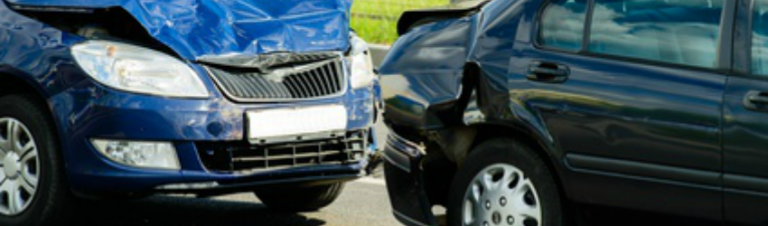
Car accidents when turning right on a roundabout
Accidents on roundabouts are one of the most common types of accidents we deal with here at The Injury Lawyers. A frequent cause of many roundabout accidents is when a motorist is in the wrong lane for their exit and position themselves incorrectly when travelling around the roundabout.
The Highway Code’s rules on roundabouts stipulates that you should take note and act on all the information available to you, when approaching a roundabout. This includes traffic signs, traffic lights and lane markings which direct you into the correct lane. You should be checking the lane markings and signage to ensure you are positioned correctly for your exit.
Read More

Motorway concertina collision claims advice
Concertina collisions are more commonly known as “pile ups”. They involve more than 2 vehicles which have been shunted into one another.
When this happens on a motorway it can be a very serious, frightening and dangerous type of road traffic accident!
Usually, the innocent parties in this type of accident are stationary in traffic and the “at fault party” is the driver that notices the stationary traffic in front of them too late and impacts with the rear vehicle, who then shunts into the vehicle in front of them and so on and so on…
Read More
Law on road accidents claims due to a sudden stop!
Generally speaking if Driver B caused their vehicle to crash into the back of Driver A’s vehicle, then Driver B would be at fault.
This is, of course, a typical rear end shunt scenario whereby liability is usually attached to the driver who drove their vehicle into collision with the vehicle in front.
As a driver myself, this must be the correct decision as you have no control over the vehicle that’s driving behind you. However, in some strange and unusual circumstances, Driver A in the above scenario could be held at fault.
Read More
Passenger compensation claims – Injury Lawyers advice
If someone asked me what I considered to be a ‘dead cert’ for a claim for compensation, I would say a passenger claiming compensation for injuries they received whilst involved in a road traffic accident.
A passenger would have to do something highly unusual, possibly extreme, to be considered to be at fault for causing an accident on the road. Under current law, you can be compensated for any injuries you have got through no fault of your own, which is why passenger accident claims are often the most straightforward.
Read More
Passenger in a car accident – Maximum compensation advice!
Being a passenger in a road traffic accident means one simple thing – you are likely to have strong prospects of a successful claim for compensation.
You have been injured as a result of another person’s negligent driving and not as a result of your own; therefore we aim to get you the best compensation possible for your injuries. It doesn’t matter if you have been a passenger in the vehicle which is at fault if they collided into another vehicle; the fact that you were a passenger and you have sustained injuries as a result of the accident proves to be a winning claim.
Read More
Claims against uninsured or untraced drivers
If you are injured as the result of a road traffic accident, you will usually be entitled to claim compensation from the insurance company that provided cover for the other vehicle.
Even though it is a legal requirement for all vehicles used on the roads in the United Kingdom to be insured, it’s estimated that there are over a million uninsured drivers in the U.K.
What happens if you are injured as the result of an accident caused by an uninsured driver?
Read More
Making a claim after a car accident
Some people will have you believe that making a claim for compensation is difficult and ultimately not worth the effort. Well, if you have been involved in a road traffic accident and sustained injuries, being compensated for these injuries is actually very straightforward – many cases can be over and done with in a few months.
The first stage of making a car accident claim is straightforward, as we submit all the details of your case to a ‘Claims Notification Form‘.
This form, which is submitted online via the Ministry of Justice portal, outlines things like the accident date, details of the accident, vehicles and drivers involved.
Read More
Uninsured and untraceable drivers – Motor Insurance Bureau
Having a car accident is a bad enough experience; but when you find out the person that crashed into you is uninsured, you fill with dread and worry about the financial burden of damages.
Read More

Understanding seat belt safety in a car crash claim
We all know that we have to wear seat belts when travelling on the roads where they are provided. We know that we have to wear a seat belt in order to protect us and others in the car or vehicle if we were to have a road traffic accident; we also know that wearing a seat belt is a legal requirement for most people.
You may not realise however that there is another reason why you should wear a seat belt…
Read More