Private Sector Accident Claims
 A large chunk of the population work in the private sector and it is arguably one of the most thriving sectors at the moment in these dark economic times with the government encouraging employment growth. We depend upon private sector workers in our everyday life- however like any other type of employment accidents unfortunately do occur and therefore you may be entitled to claim compensation.
Accidents in the private sector could be arguably more common as the duty to impost health and safety in the workplace is left solely to the employer who may chose to run things inadequately.
We all rely on our jobs heavily- they give us our wage which consequently allows us to live comfortably and of course splash out on some treats every now and again. Therefore being involved in an accident which consequently leaves you unable to work can cause much more than financial worry and therefore here at The Injury Lawyers we fight to not only get you the compensation you deserve but also to recover any losses and help with any psychological injury.
Read More
What procedure would you follow when dealing with an accident?
Being involved in an accident can be a stressful and confusing time and therefore many people often are left at a loss as to what to do next in relation to making a claim for compensation. This should not be the case as the Civil Procedure Rules (the legal rules that govern civil claims) are in place to ensure making a claim is as simple as possible.
Read More
 Working with hazardous substances can, as the name suggests, be hazardous. Extra caution should be taken and appropriate Personal Protective Equipment (known for short as PPE) should be provided. PPE could be in the form of gloves, overalls, goggles, masks or whatever other equipment is necessary to make the job as safe as possible and to protect workers from harm.
Governing this area of law is the Control of Substances Hazardous to Health Regulations 2002 (COSHH). Substances hazardous to health can include chemicals, products containing chemicals, fumes, dust, vapours, gases, germs etc. These substances are covered by COSHH but things like asbestos and radioactive substances are covered by alternative Regulations. COSHH is covered extensively by the Health and Safety Executive on their website.
Some substances have exposure limits. This obviously means that exposure to that substance whether it is through breathing in fumes or by skin contact etc is limited. With some tasks a permit to work may be required to carry out a certain task which involves some contact or potential exposure to hazardous substances. A permit to work would be based on a risk assessment to ensure that all potential risks and precautions are taken.
Read More
 Our society relies quite heavily on oil production, but it can be a dangerous industry for employees. There are a great number of day to day risks for oil workers whether it be cleaning up oil spills or working around refinement machinery. It is not actually oil itself that is the main danger it is more the environment in which oil workers work in, such as an offshore oil rig.
The machinery used to try and refine the oil can be dangerous. An oil rig is a dangerous place to be. Cleaning up oil spills can be dangerous as people could be exposed to toxins in the air and many of the dispersants used to clean up oil can be dangerous to humans. When used correctly dispersants can be an effect method of response to an oil spill. Dispersants are capable of removing large amounts of certain oil types from the sea, but that is a science in itself for which the details are quite technical.
Dispersants pose a risk to the health of humans as well as to the life of animals including fish, birds etc. One of the dispersants used at the BP oil spill was Corexit 9527A which contains the toxin 2 Butoxyethanol which can cause injury to red blood cells, kidney or the liver with repeated or excessive exposure. Past exposure to Corexit 9527A has led to health problems including blood in the urine and kidney/liver disorders. Unsurprisingly this has led to compensation claims.
Read More
 If you work in a commercial kitchen environment then you may be well aware of the dangers. There are dangers in the kitchen at home but in a commercial environment the risks are likely to be greater.
First of all, the risks in a commercial kitchen are likely to be greater due to the equipment and the scale or size of it. Knives for example are likely to be bigger and sharper in a commercial environment; ovens are likely to be bigger and hotter, there are likely to be numerous people in the kitchen meaning that people may bang into each other. At busy times people are likely to be rushing and this is another factor. These are just some of the reasons why a commercial kitchen may be more dangerous than a residential kitchen.
Knives are one of the most obvious dangers that could cause injury. However heat is another danger from ovens, deep fat fryers, boiling water etc. Burn injuries are common in the kitchen as are cuts and slices of the skin. Kitchen equipment can cause severe injuries. Only recently I was working on a case where the Claimant was burnt from boiling water from a large industrial kettle. Everything in a commercial kitchen is bigger and more powerful and the risk of serious injury is increased.
Read More
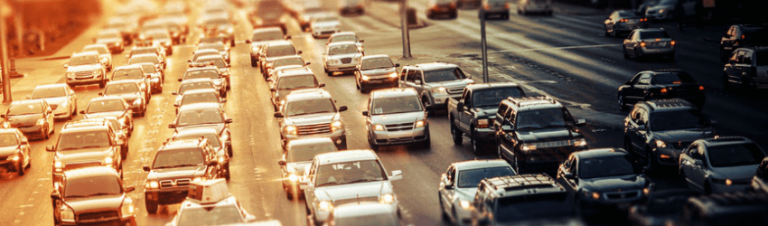
Motorway concertina collision claims advice
Concertina collisions are more commonly known as “pile ups”. They involve more than 2 vehicles which have been shunted into one another.
When this happens on a motorway it can be a very serious, frightening and dangerous type of road traffic accident!
Usually, the innocent parties in this type of accident are stationary in traffic and the “at fault party” is the driver that notices the stationary traffic in front of them too late and impacts with the rear vehicle, who then shunts into the vehicle in front of them and so on and so on…
Read More
Hit in the rear car accident – UK Case Law
Being hit in the rear by another vehicle is seen as a pretty straight forward type of accident, and usually it is. After all, how can you control what the person behind you is doing?
Under Rule 126 of the Highway Code you must:
“Drive at a speed which will allow you to stop well within the distance you can see to be clear: You should leave enough space between you and the vehicle in front so that you can pull up safely if it suddenly slows down and stops”
 Maybe you have taken on some part-time hours to help out with the bills or maybe you are a student with a part-time job to help you fund your studies – whatever your circumstances it is a sad fact that you may suffer an injury at work while at your part-time employment. What you need to know is if this does happen to you what can you do about it?
The truth is that the answer is fairly simple: you can still claim against a part-time employer. Just because your hours are part-time it doesn’t mean that you only have part of the rights to claim of a full-time employee!
Employers are required by law to have insurance policies in place to cover all of their employees regardless of employment status; these policies are known as Employers’ Liability Insurance which is required under The Employers’ Liability (Compulsory Insurance) Act 1969.
Read More
 Some people like them and others hate them; whatever we think, elevators can be a genuine cause of injuries and compensation claims.
I have to admit that elevators in a building containing numerous floors can be handy.
Imagine a multi story building without elevators. We would all have to take the old fashioned route of walking – how would we ever cope with that? Some people may enjoy the exercise but others would not. Perhaps for many workers who work on the top floor of a multi story building time is of the essence. Taking an elevator to the top floor would certainly save time as opposed to walking up flights of stairs. And of course we have to consider elderly and disabled people, people with prams etc. Taking it all into account, elevators are necessary.
Read More
 A gas explosion is some kind of explosion which may result from a gas leak in the presence of an ignition source. Explosive gasses include methane and propane to name just a couple.
The BP oil disaster was caused by a methane bubble which triggered the explosion. The deadly bubble of methane forced its way up from beneath the ocean floor and caused the explosion in the Gulf of Mexico, according to workers who survived the disaster. The disaster itself caused severe consequences with 11 deaths and more than three million gallons of crude oil pouring into the sea. Such a disaster highlights the dangers of a gas explosion.
Of course we should be well aware of the dangers anyway as the BP oil disaster was certainly not the first disaster of its kind. Many people will recall the Cleveland East Ohio gas explosion which occurred back in 1944. The gas leak, explosion and resulting fires killed an estimated 130 people and destroyed one square mile area on Cleveland, Ohio’s east side.
Read More